 más allá de las calles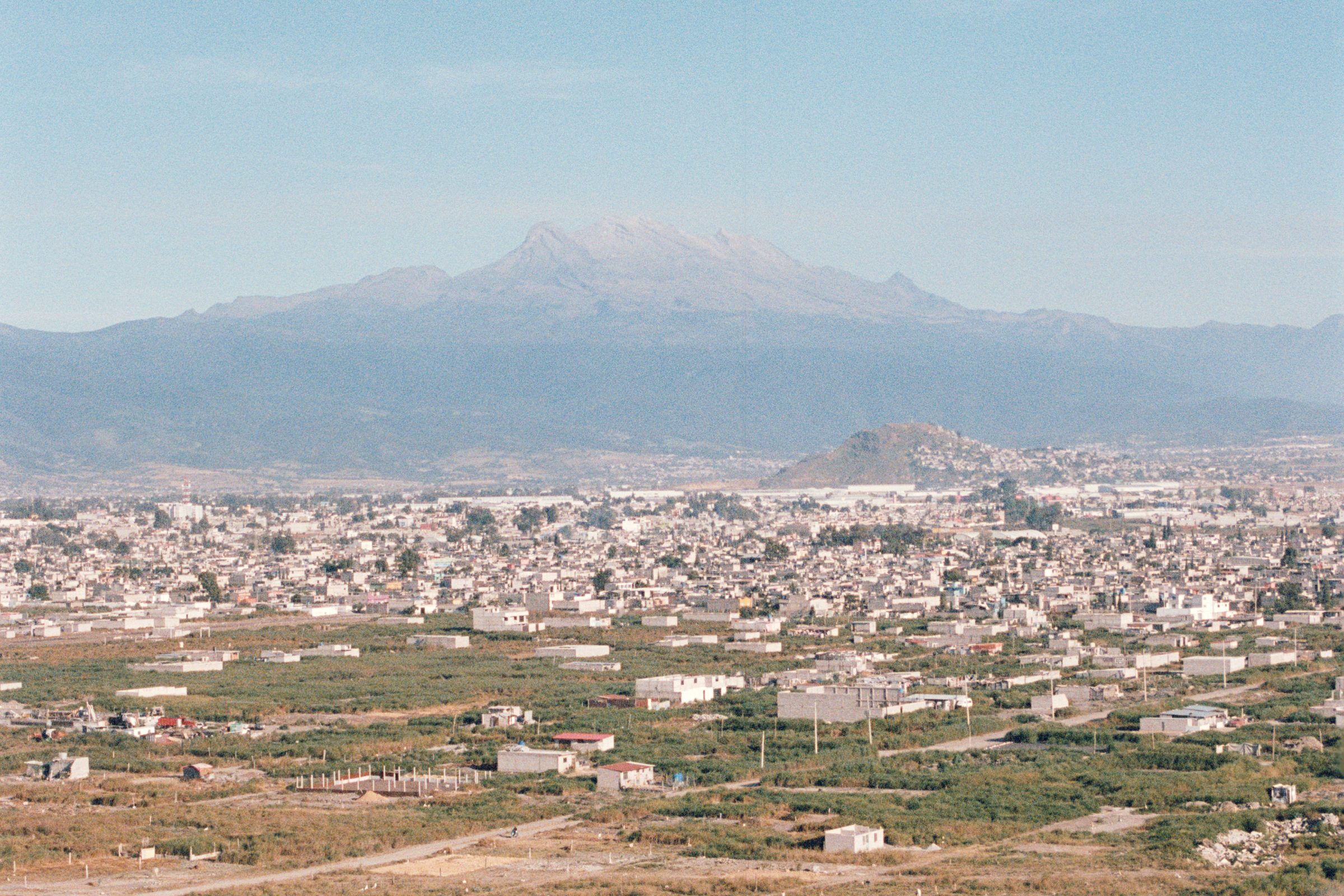
valle de chalco solidaridad · estado de méxico
más allá de
las calles
Two years of co-creation with the people of Valle de Chalco and the Museo Comunitario del Valle de Xico
valle de chalco solidaridad · estado de méxico
a municipality told from the inside
Valle de Chalco Solidaridad lies east of Mexico City, on the former bed of Lake Chalco. Nearly 400,000 people live on a territory built by hand, house by house, street by street, often before the water and before the electricity. From the centre it looks like a uniform margin. From the inside it is a whole city: tianguis — the street markets that are set up and taken down each week —, moto-taxis, schools, a rugby club, Mixtec weavers, a community museum, volcanoes on the horizon.
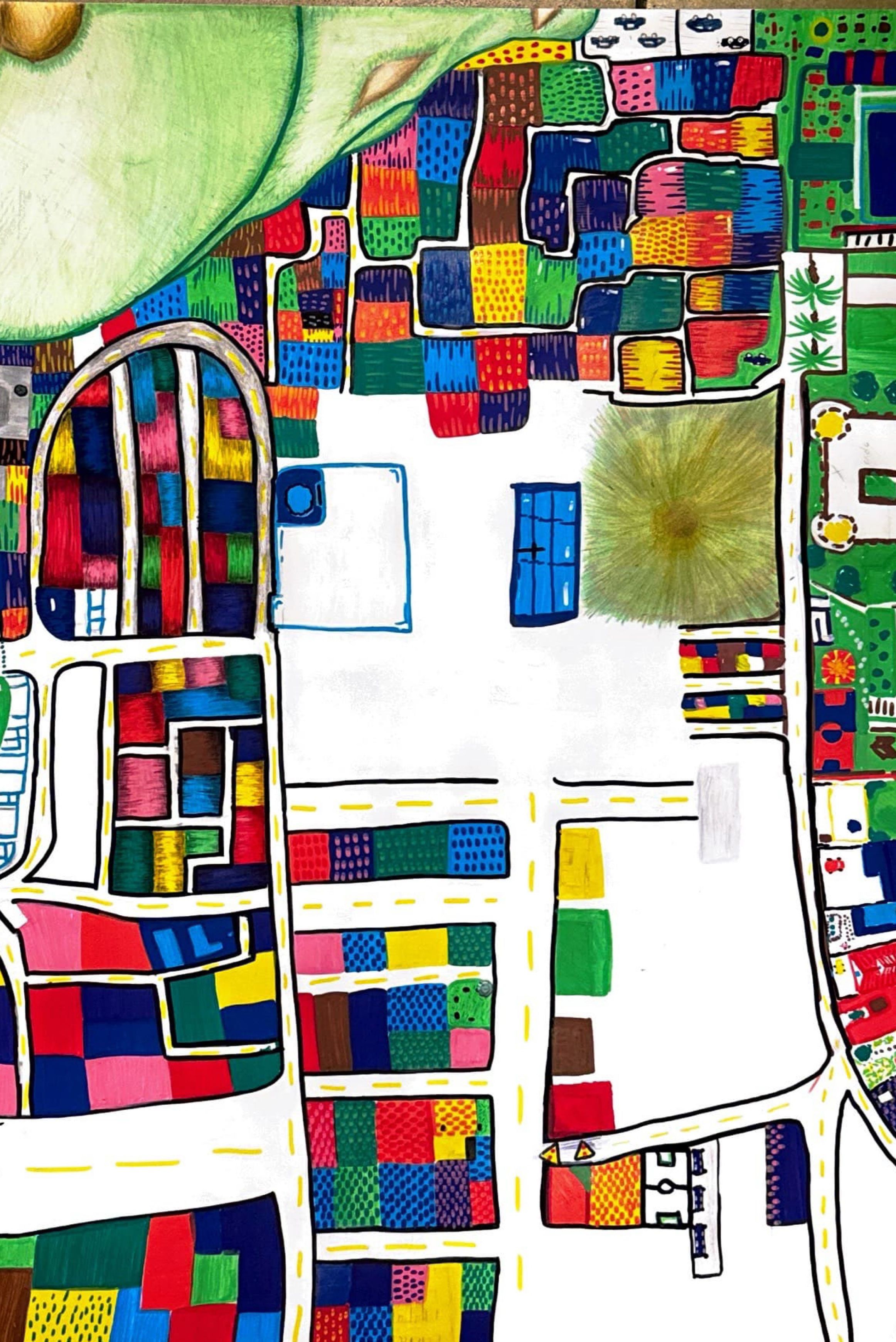
In 2024 and 2025, mOst carried out two projects here with the Museo Comunitario del Valle de Xico and Arte y Cultura Xico A.C. Twice the same question was put to the residents: what do you want to show of your own place, and with which images? Twice the same answer in practice — workshops, film cameras, microphones, maps, texts written in the first person, then exhibitions pasted onto the walls of the neighbourhood.
This site gathers what was made: the photographs and their captions, the portraits and the interviews, and the exhibitions pasted up in the street. Nothing was written in their place.
how we work in a territory
mOst does not “give people a voice”. We build the material and technical conditions for residents to produce, select and circulate their own accounts.
eight working principles
- start from the point of view
The subject is never set in advance. It is built with the group: what matters here, what we want to show, what we refuse to show, who we are speaking to.
- a toolbox, not a showcase workshop
Film and digital photography, sound recording, interviewing, sensitive mapping, writing, editing. The techniques are handed over for good: framing, selecting, captioning, editing, exhibiting.
- film as a discipline of looking
Thirty-six frames. Every shutter press becomes a decision, and therefore a language. It is the opposite of the feed: you look first, you argue afterwards, you wait for the film.
- the caption belongs to its author
Each image is titled and commented on by the person who took it. Those are the texts exhibited and published here, in their language and in their register.
- give the work back where people live
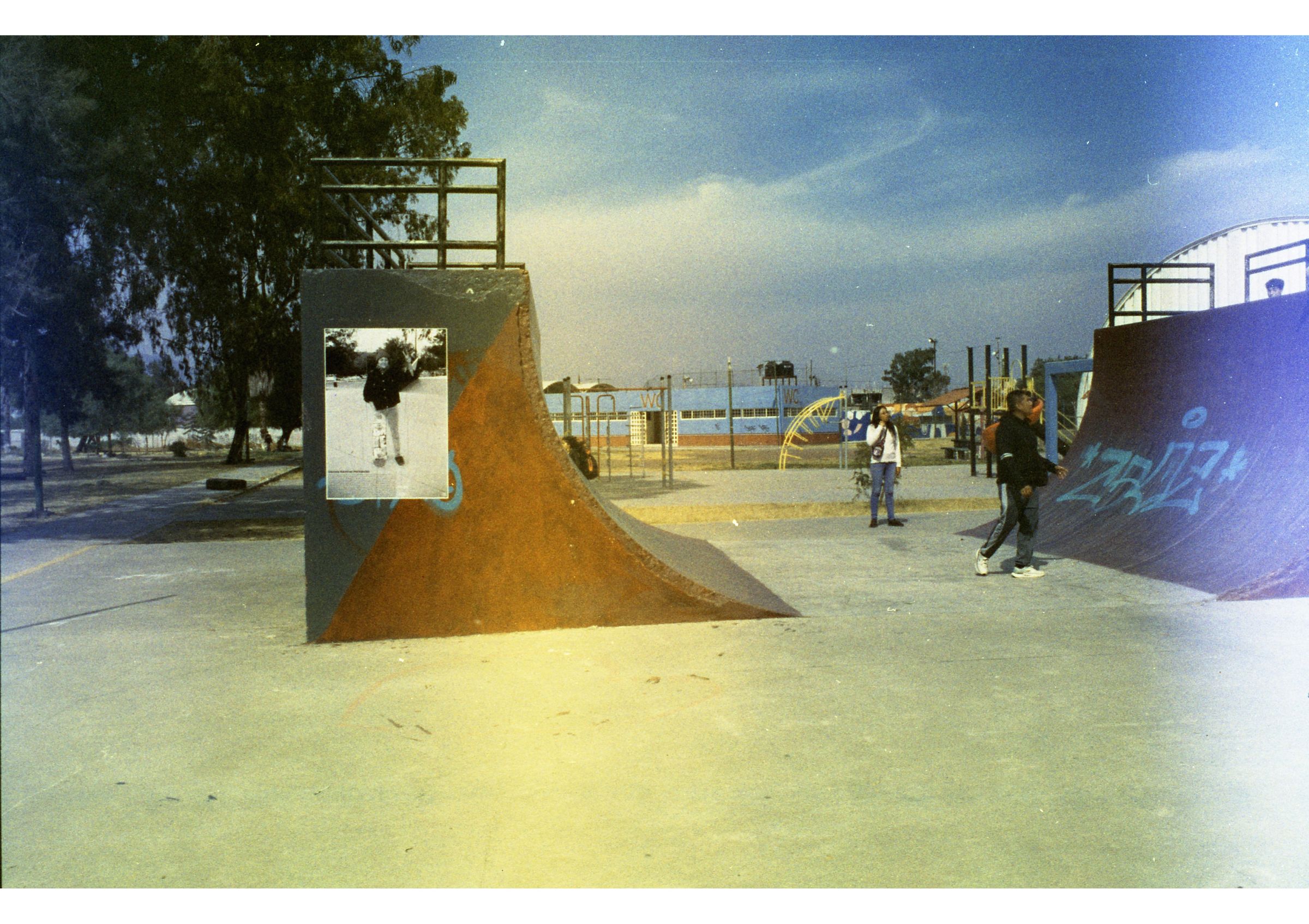
The public showing is not a private view: the prints are pasted onto walls, gates and the skatepark ramp, at passer-by height. The exhibition goes to meet people where they already are.
- build a living archive
The images, the sound and the texts stay in the territory, with a partner who looks after them. Here that partner is a community museum: the work enters a local memory that carries on without us.
- the long haul, never a flying visit
We do not replace the organisations that hold the ground all year round. We come back: part 2 grew out of part 1, and out of the trust built in between.
- connect peripheries to one another
The working-class neighbourhoods where mOst works — Valle de Chalco, the Maré in Rio, Bagnolet — look at and write to each other directly, with no centre translating on their behalf. It is not a comparison: it is a resonance.
our partner: the museo comunitario del valle de xico
The Museo Comunitario del Valle de Xico and the association Arte y Cultura Xico A.C. have worked for decades inside the old hacienda of Xico: they hold an archaeological collection donated by residents themselves, restore a historical memory the municipality has nowhere else to carry, and treat the museum as a social tool as much as a place of conservation.
That changes everything. The workshops did not take place in a neutral venue but inside a local institution people already know, where you can invite someone to sit down for an interview. And the work does not leave with us: it enters a local archive governed on site.
“The Museo Comunitario matters enormously to me, because it is exactly what I love about Valle de Chalco: it taught us that Valle de Chalco has an immense history. It opened its doors to me when I was small.”Daniela Ramírez Hernández
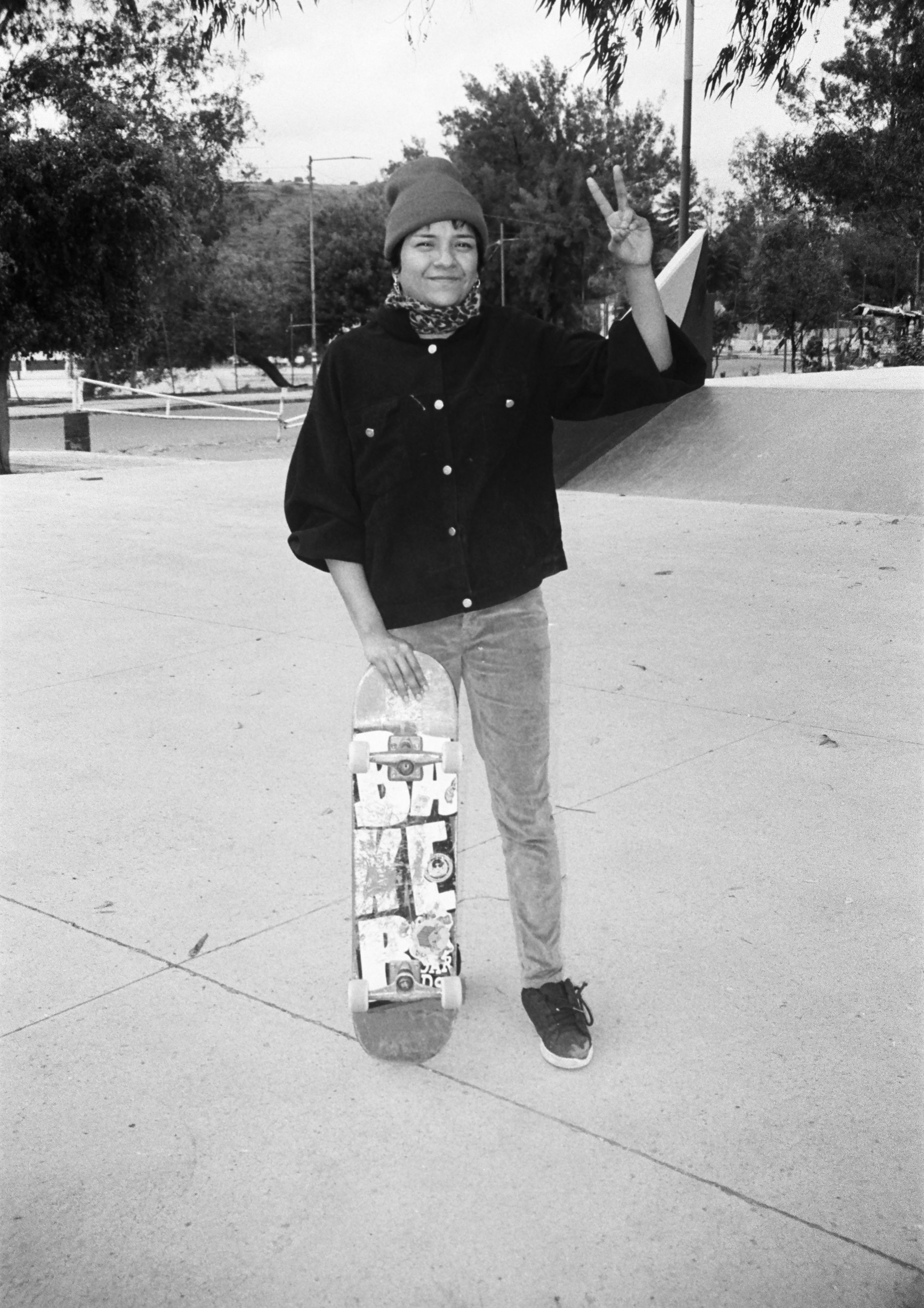
“Skating opened my mind and my heart so I could open doors to other things.”
Daniela Ramírez Hernández29 years old · skater · carer
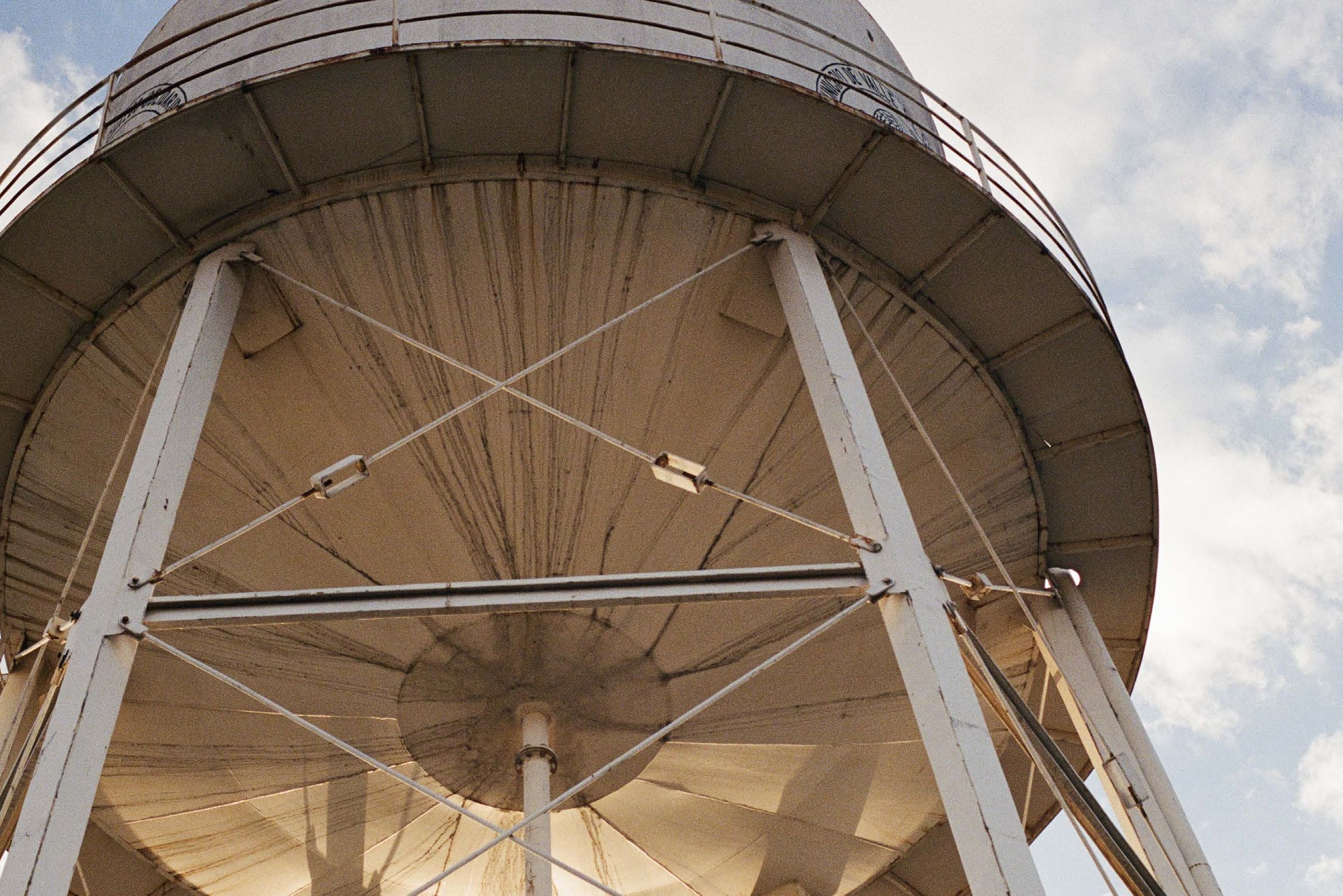
Young people from Casas ARA, on the Cerro del Marqués, learn film photography, sensitive mapping and sound interviewing, then exhibit their neighbourhood inside their neighbourhood.
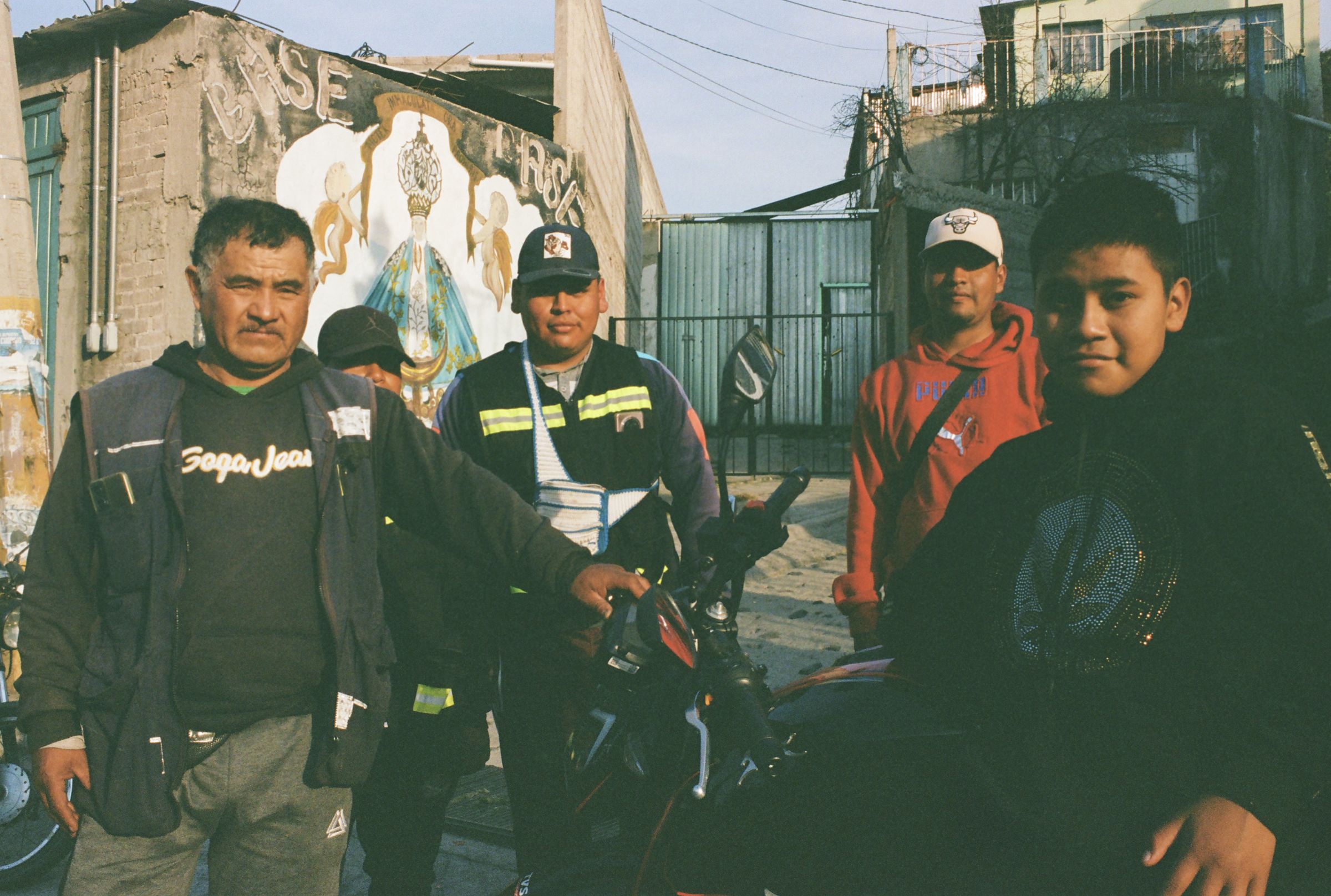
Seven residents chosen by the participants, interviewed at home, at work or at the street market, photographed, then pasted life-size across the streets of the municipality.
partners
Museo Comunitario del Valle de Xico
Arte y Cultura Xico A.C.
mOst — mon œil sur terre
credits
photographs and texts by the workshop participants — Valle de Chalco Solidaridad, 2024–2025.