 más allá de las calles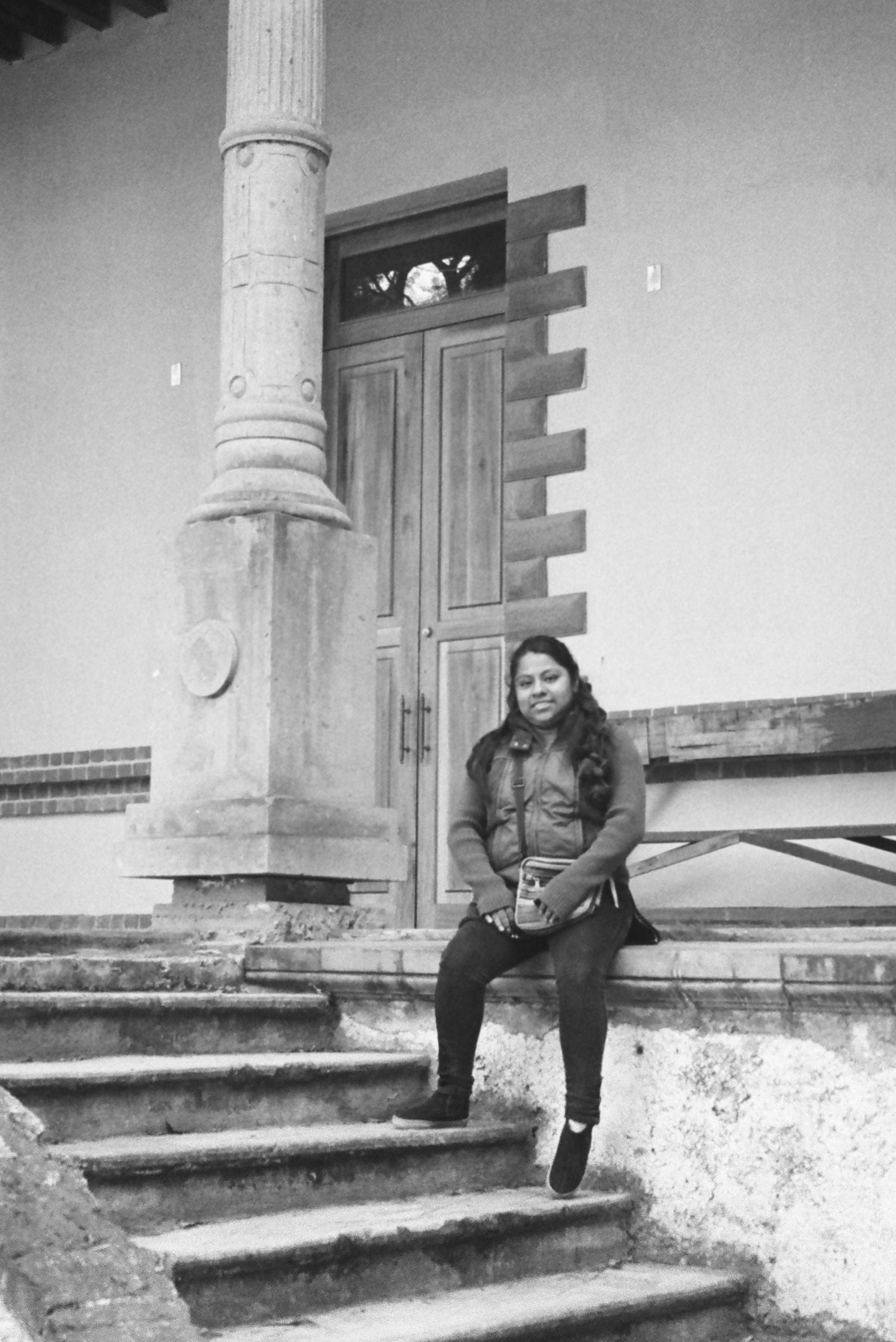
portrait · artisan · backstrap weaver · Mixtec speaker
Luz Andrea Quiroz Hernández
“In my case I don’t write the language, I speak it. Mixtec is taught to you by the grandmothers, by your parents, at home.”
Luz Andrea Quiroz Hernández
Woman, Oaxacan, Indigenous, artisan, mother, wife and very ambitious — though I do not know whether that is the order in which she would like to be described. All of them are Luz Andrea Quiroz Hernández. A woman from San Juan Colorado, in the State of Oaxaca; a village where you can still see adobe houses roofed with red tiles and banana trees heavy with fruit. Bilingual Indigenous woman. Andrea’s mother tongue is not Spanish, which she learned at school: she is a Mixtec speaker, although she cannot write it.
Andrea is an example of the multiculturalism that Valle de Chalco Solidaridad holds. Besides her language, Andrea works and promotes her work on the backstrap loom and, to a lesser extent, the cuisine of her birthplace. She takes that work to craft fairs — activities that have allowed her to build a collaborative network with other artisans.
Andrea is also the mother of two daughters, with her husband, whom she did not know and with whom her only contact had been by telephone for three or four months. It was he who brought her to live in Valle de Chalco Solidaridad, at the age of 15. Although at first Andrea was reluctant to teach Mixtec to her eldest daughter, for fear of the discrimination she and those close to her suffered, today she works for the preservation of her language.
Ambitious — a word not to be understood negatively, but as a woman who has dreams and goals to fulfil and who works to reach them. Her work on the backstrap loom has placed her where she now allows herself to ask for more spaces for her fellow artisans. Andrea is one of the many women who came to live in Valle de Chalco and who have many stories to tell.
the interview
Extracts from the recorded interview, translated from Spanish. The talk has been tightened, never corrected.
Where are you from, and why did you come to Valle de Chalco?
I was born in a small village called San Juan Colorado. We belong to the state of Oaxaca, we speak our mother tongue, which is Mixtec. I came because I got together with my husband, and since he already lived here in Valle de Chalco, he came for me and that is why I stayed. I didn’t really know him: we talked for about three or four months, he spoke to my father, and I came with him. I was 15.
What do you do?
I work in crafts, which is the backstrap loom, and a little in cooking. I make atoles, tamales, moles; when we have to go out and sell, or when someone orders, I cook and deliver. Traditional Oaxacan recipes.
Where do you sell your work?
Usually I go out to craft fairs for the textiles — they’re more like artisan events. With the food it’s more in schools: teachers who ask me for traditional dishes from my community. If it’s nearby I go too, because I have to transport the pots, and it’s more complicated to take them into the city. I sell near here, or at events where crafts are sold, or cultural ones.
Which institutions support your work here?
The museum, yes. It didn’t used to work like that; now when they invite me I feel they talk a bit about the craft work, or present it, or support me by buying, by consuming; in that respect, yes. And with Educación y Cultura the same: when spaces are arranged, they give us places to sell, and they themselves support the trade.
Are those spaces enough?
Not entirely, which is why you have to go and find other spaces outside. I think giving us more spaces, or calling us in, talking about it, having a fixed space in Valle de Chalco — that would be very good; being taken more into account by the government or whoever, being talked about and given more publicity, because I feel there is very little.
And for the other artisans?
Not only for me: since there are many of us artisans in Valle de Chalco, I think a lot of people don’t get that space. I feel that once they know you they give you more, and that for those just starting out it’s harder to be given that space. There are other kinds of support for artisans, I think there are several, but they don’t reach us: maybe if we don’t know how to look for them, they don’t arrive. Institutions could bring them down to the artisans in their own municipality. We need someone to take us by the hand, because as artisans we don’t know much about these things.
What other languages do you hear here?
There’s Triqui, Mazatec, Zapotec, and mine, which is Mixtec. Up there is a lady, a grandmother, who speaks Mazatec. On this side is another woman. Here in Valle de Chalco there are many mother tongues. There are several women who do embroidery, cross-stitch, tacking; others who do food. There are more women who also work the backstrap loom and are not from my community: they are Triqui, they come from Chiapas, they are different, but it is also backstrap weaving. There are a great many.
How long does a piece take?
A band, I can have it in about three days. If you put figures in it takes fifteen days; if you add more and fill it, it can go up to a month, it depends. The name is the same, but there is a lot of difference, because everyone warps differently. They render things they think of, or that they’ve been taught, or what they see around them, which is like what we do, but very different.
Do you write the language?
In my case I don’t write, I speak it. I do think there is a written form, but I didn’t learn it, because in the village everyone who is born there speaks Mixtec, everyone born there learns Mixtec, but it was never taught to us, because at the school I went to it was never taught: they always taught us Spanish. Now I think they are starting to teach the writing, and there are primary schools that include it. Mixtec is taught to you by the grandmothers, by your parents, at home.
Did you teach the language to your daughters?
I have given language workshops, and at home I try. My eldest girl is grown now. When I wanted to teach her it was complicated, because you feel people look at you strangely, or I don’t know, you feel belittled for speaking differently from them. When I arrived here, with my eldest, I never spoke it to her, because I said: I don’t want them treating her the way they treat me. It’s a way of protecting them, but I think I did wrong. Now, at home, I try to speak it with the girls; maybe they don’t understand me a hundred per cent and they struggle, but there are words that both of them are starting to say.
What would you ask of the authorities?
As artisans we really don’t ask for much: only that we be made more visible and taken into account for events, or that events be held so there is more publicity, and that we artisans have somewhere to trade here in Valle de Chalco — because in fact most of us go outside our own municipality; I see there are sometimes more opportunities in other municipalities than in Valle de Chalco. So it would be that: gathering, doing something more, and more often, so that we become better known and perhaps have a specific place to sell our pieces, every month, every two months. I hope we get to the point of having that space, and having it regularly. Something more established, more fixed, more formal.
Interview conducted by Sofía Torres Jiménez, 10 November 2025, in the granary of the Hacienda de Xico.
back to the portraits
seven residents
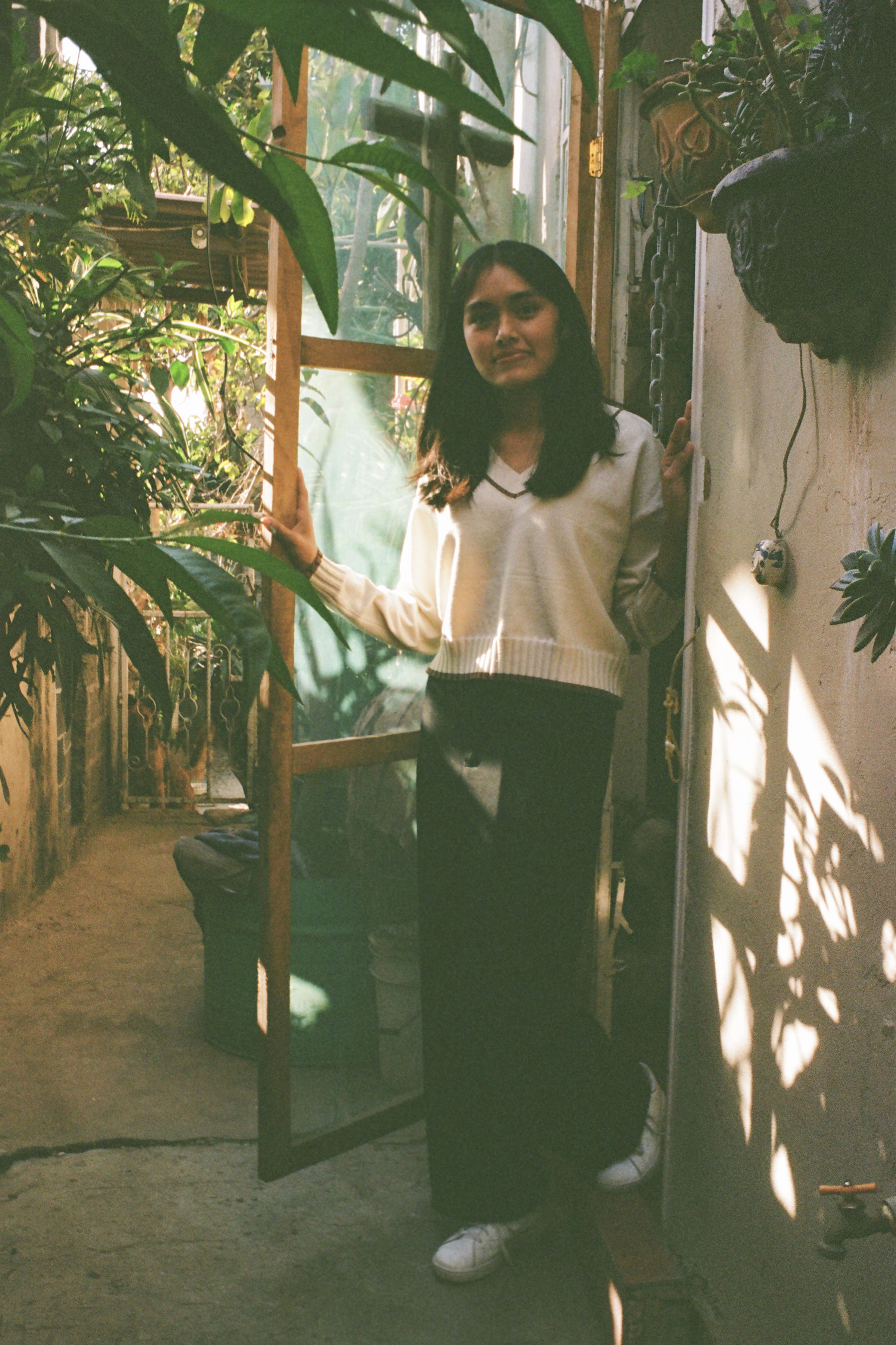 Zulay Ikarani Amaro Jasso15 years old · high-school student
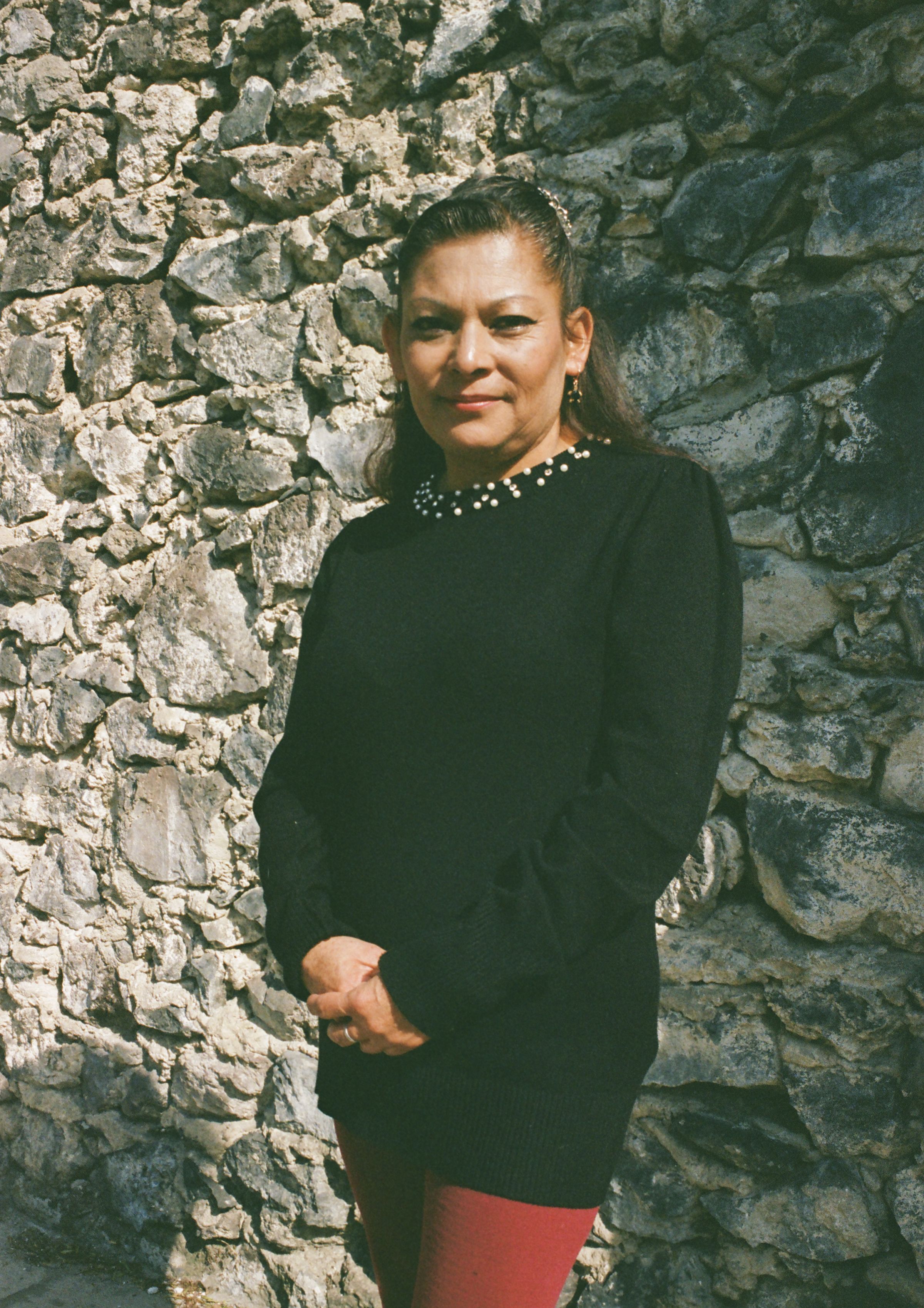 María Dolores Martínez Rangel50 years old · homemaker · choir singer
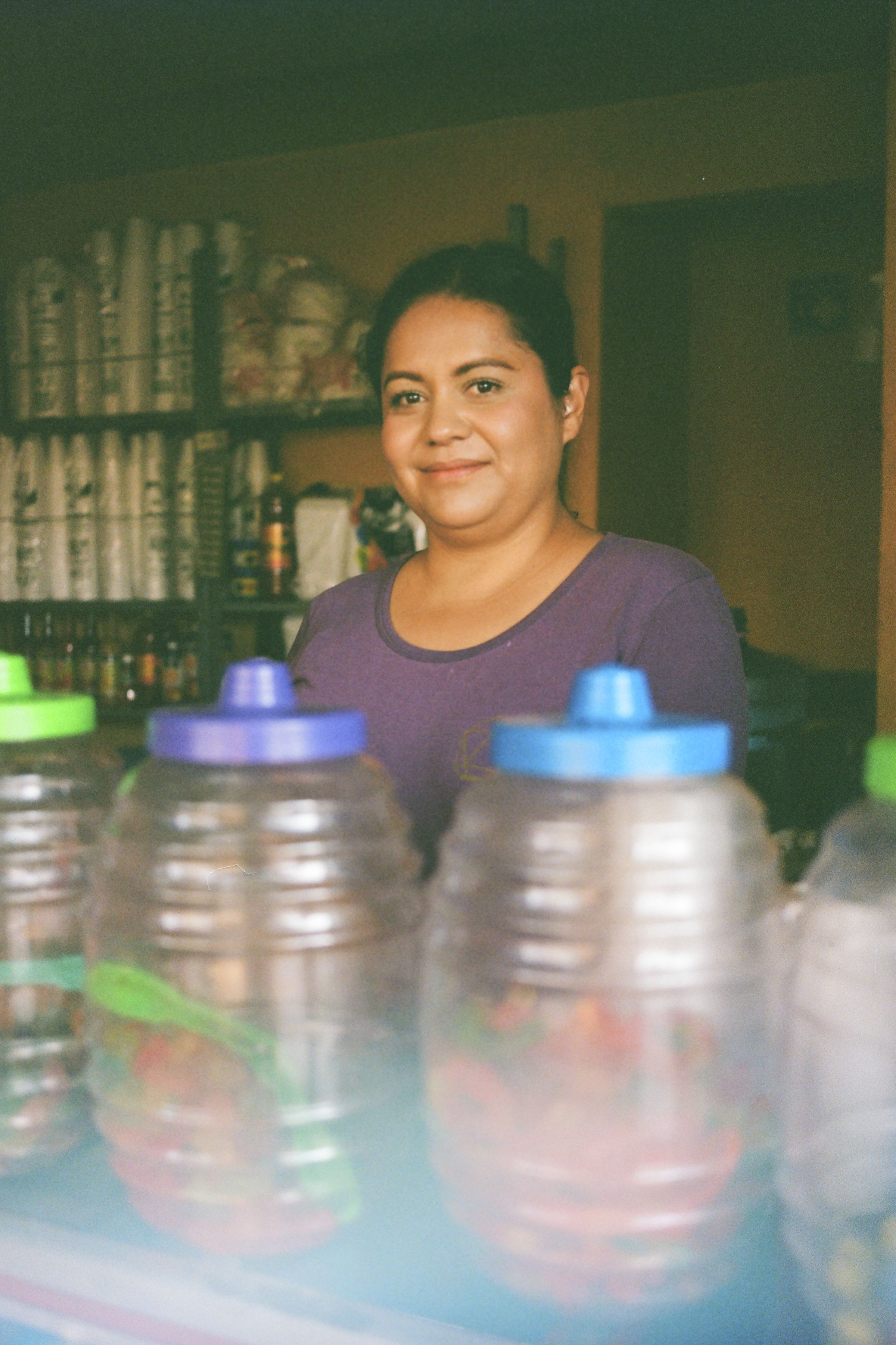 Cecilia del Sagrario Losa Arreaga34 years old · shopkeeper
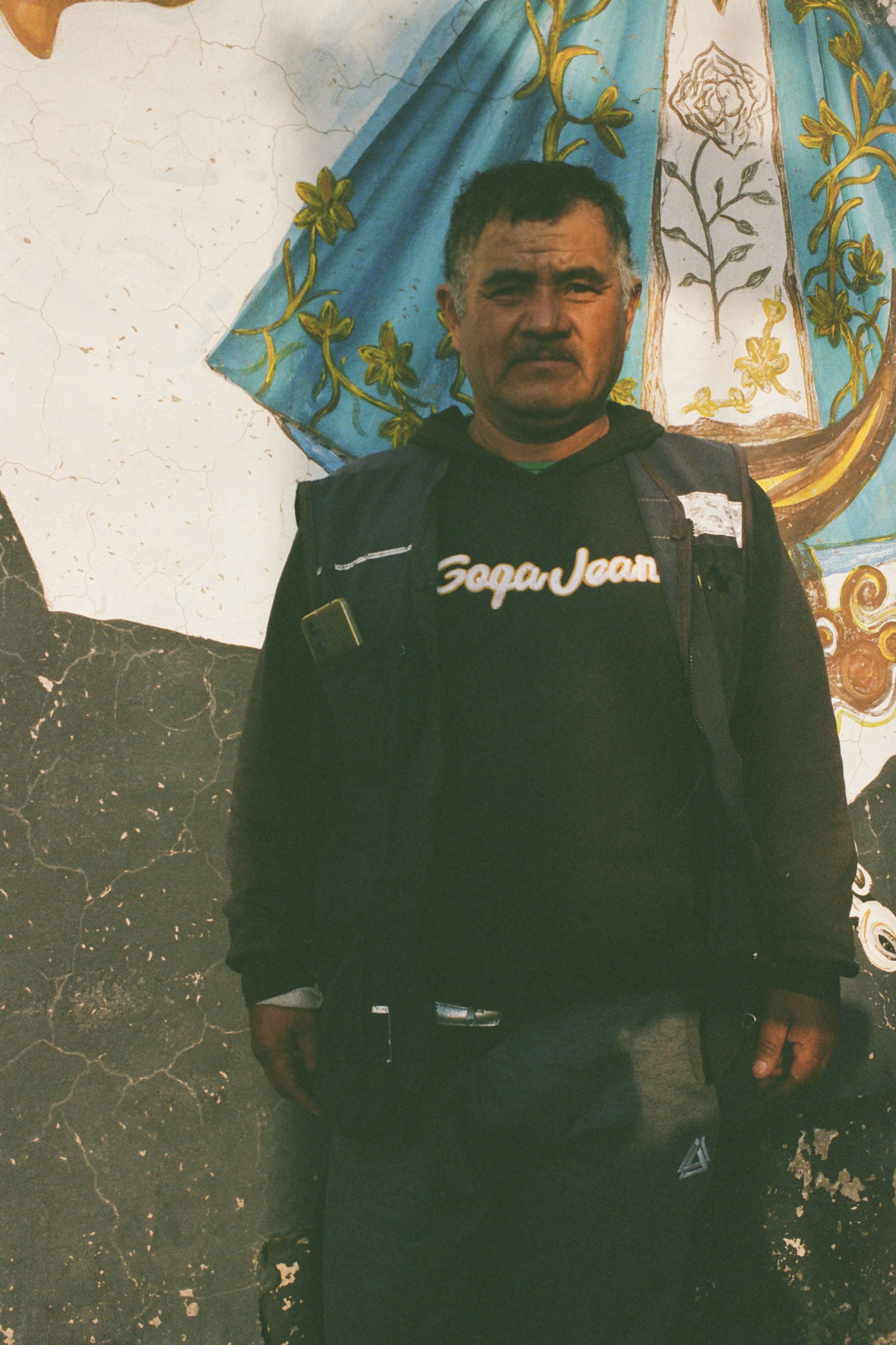 José Rivera Mendoza53 years in the municipality · moto-taxi driver
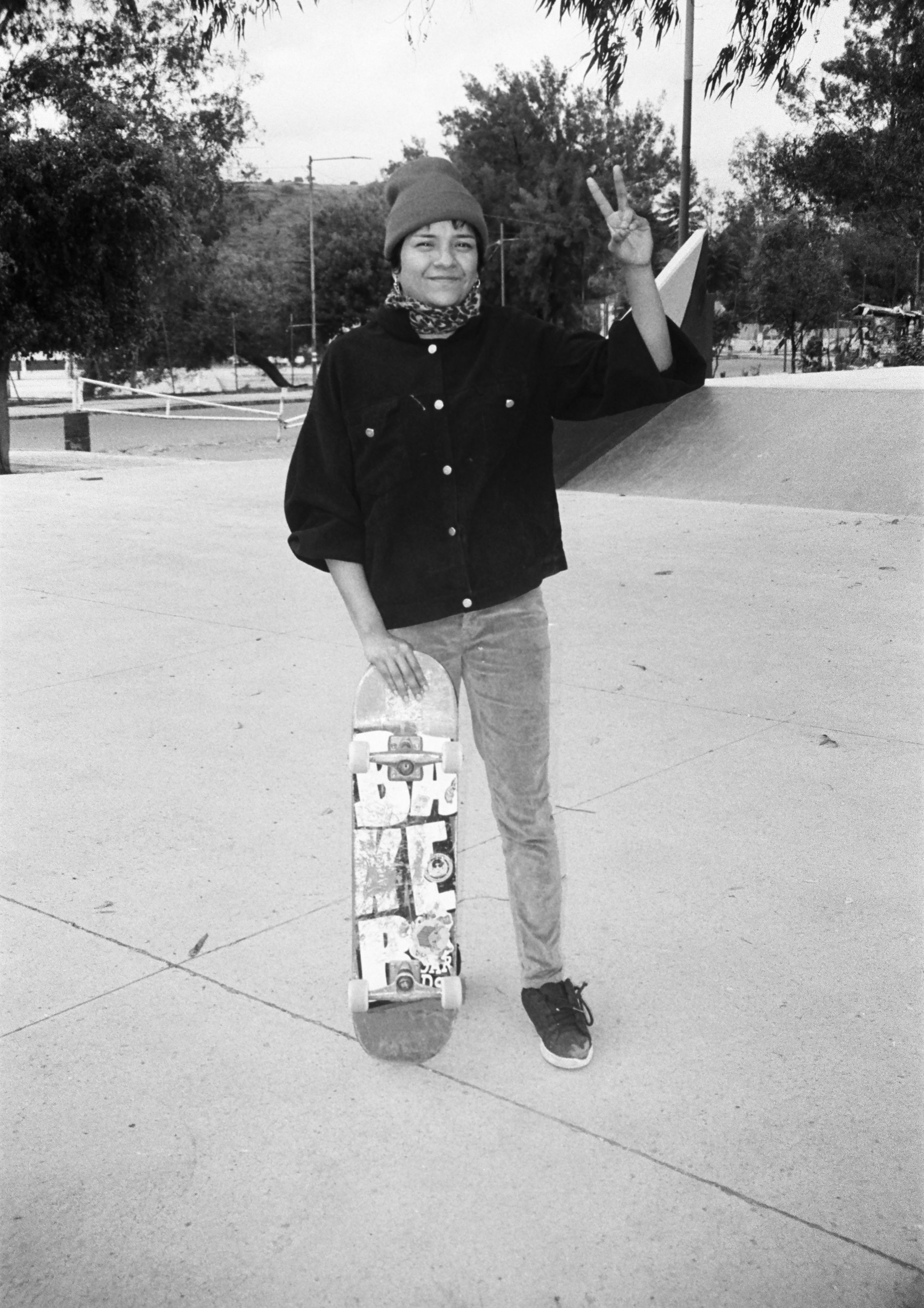 Daniela Ramírez Hernández29 years old · skater · carer
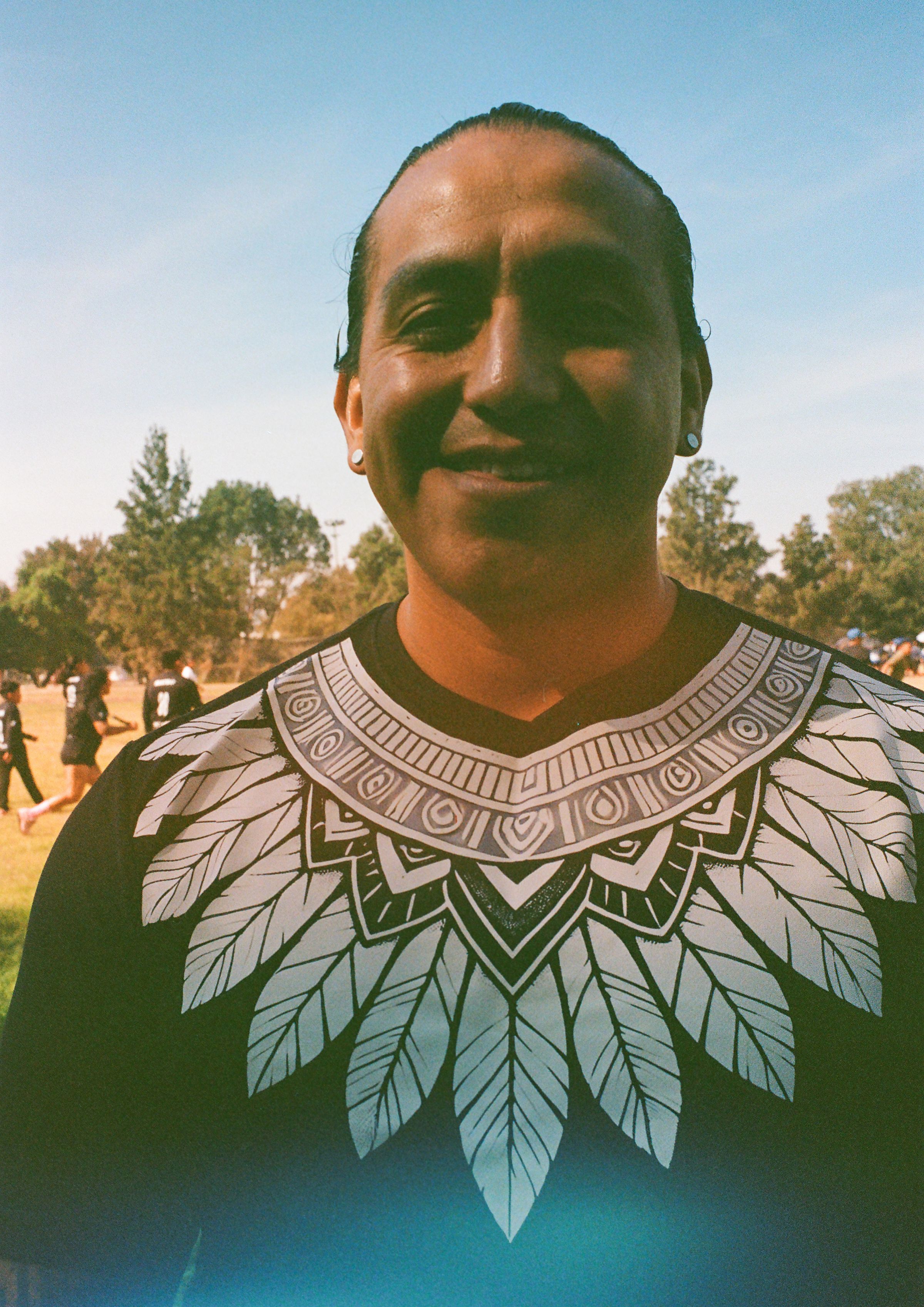 Adrián Alvaradofounder, coach and president of Rugby Mictlán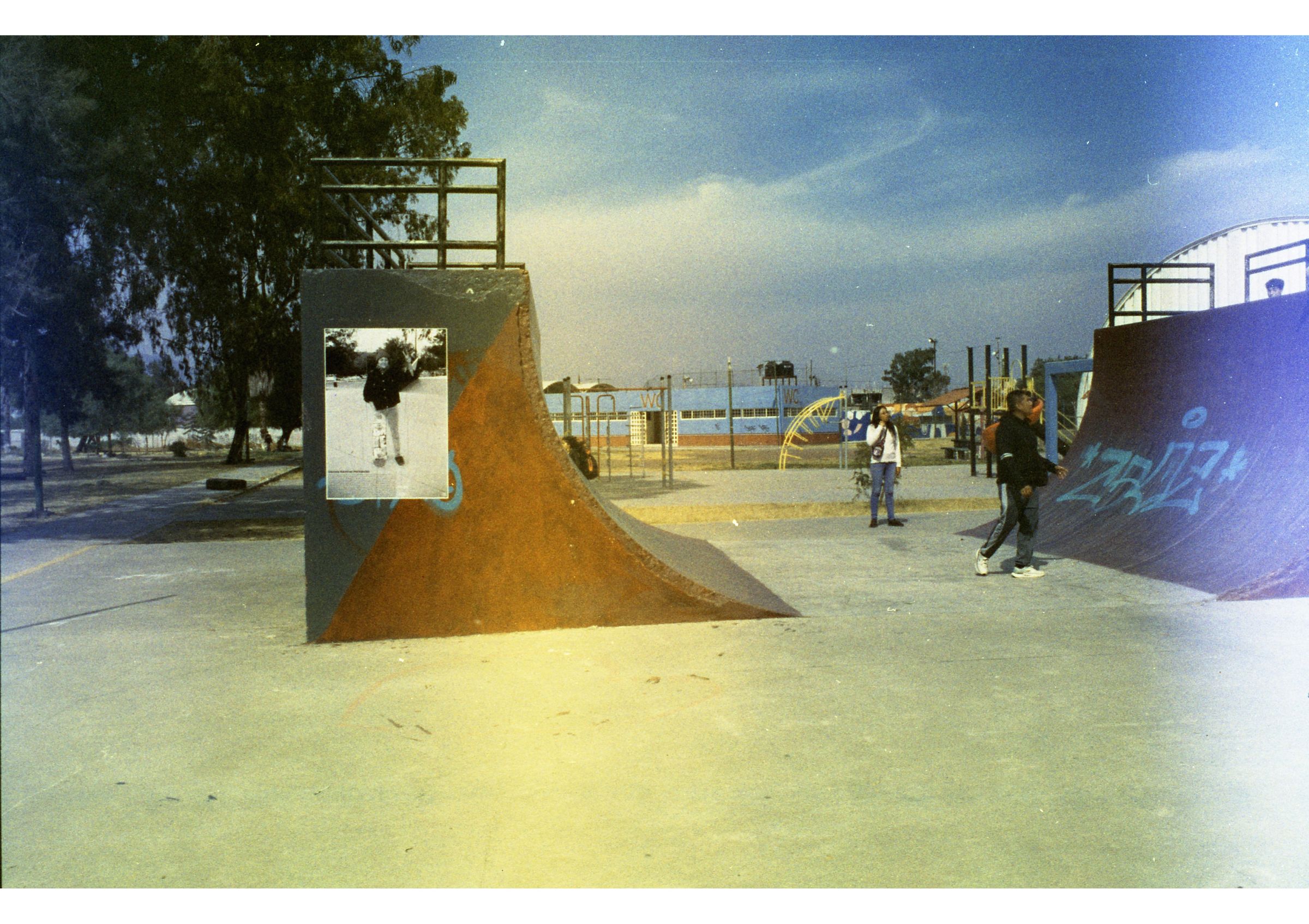
partners
Museo Comunitario del Valle de Xico
Arte y Cultura Xico A.C.
mOst — mon œil sur terre
credits
photographs and texts by the workshop participants — Valle de Chalco Solidaridad, 2024–2025.